
How to Check If Someone Is in the Military: Reliable Verification Methods
Knowing whether someone is serving on active duty is a matter of law, not curiosity. The Servicemembers Civil Relief Act requires courts, lenders, and landlords to verify military status before taking steps such as eviction, repossession, or filing a default judgment. Ignoring that requirement can expose any business or attorney to costly penalties.
False claims of military service are also more common than many expect, especially in tense legal or financial disputes. A simple statement that someone “is in the military” is not enough to qualify for protection under federal law.
This guide explains how to check if someone is in the military using reliable verification methods. As you read, you will learn which systems provide legally defensible confirmation and which do not.

Key Takeaways
- Military status must be verified, not assumed, when legal or financial action is involved.
- SCRACVS provides documented, court-ready verification designed for compliance use.
- DMDC is the official government database, but it requires precise inputs and manual handling.
- Informal methods, such as IDs or verbal claims, are unreliable and legally risky.
- Choosing the wrong verification method can expose businesses to serious penalties.
Method 1: Use SCRACVS – A Professional Military Verification Service (Recommended)
The Servicemembers Civil Relief Act Centralized Verification Service (SCRACVS) is the most dependable way to verify military service for legal and financial compliance. It was created to help law firms, lenders, and property managers confirm whether a person is on active duty through official government data rather than guesswork or verbal claims.
SCRACVS connects directly with the Defense Manpower Data Center to confirm details such as:
- Active duty status and service dates
- Military branch (Army, Navy, Air Force, Marines, or Coast Guard)
Each search verification is sourced from official Department of Defense records, producing accurate, up-to-date military service records that stand up in court and meet SCRA documentation standards.

What makes SCRACVS unique is its ability to provide written verification for compliance. Every request generates an emailed military status report or court-ready affidavit document that shows your organization acted in good faith before proceeding with:
- Evictions
- Repossessions
- Default judgments
- Foreclosures
- Debt collection actions
The system is also flexible. If you do not have a Social Security number, SCRACVS can often verify using a person’s full name, date of birth, and other identifiers. This allows you to confirm a military background even when limited information is available.
Using SCRACVS protects your business from unnecessary risk. It shows that your verification process follows federal law, helps prevent costly mistakes, and ensures that actions involving service members are handled with documented proof.
Method 2: Use the Official DMDC Website
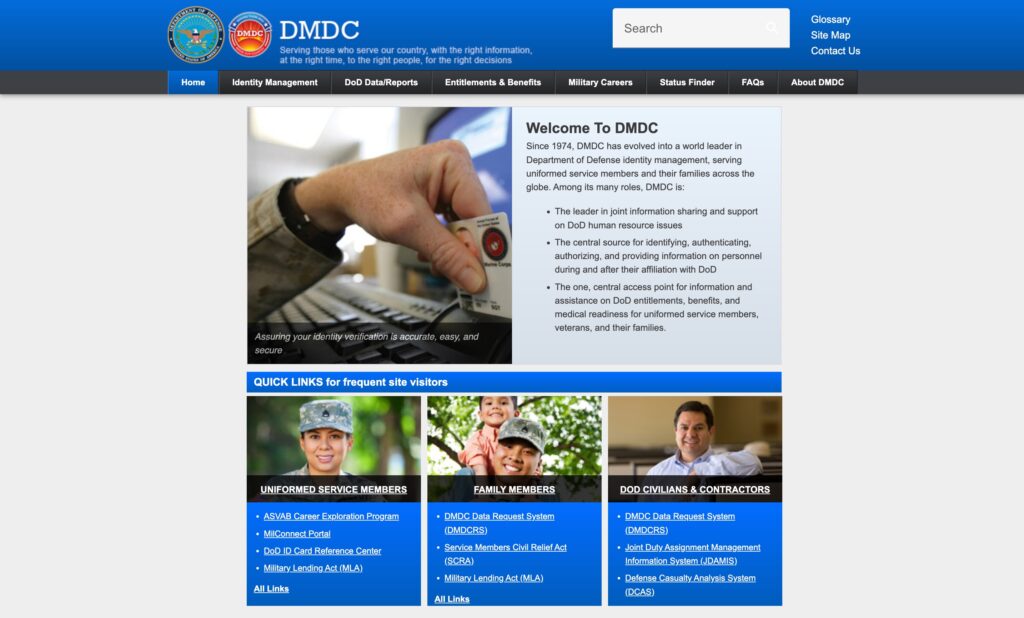
The Defense Manpower Data Center (DMDC) is the Department of Defense’s official system of record for verifying military status. It is the government source that SCRACVS and other verification providers rely on to confirm whether an individual is serving on active duty at a given time.
Through the DMDC SCRA website, you can obtain:
- Confirmation of active-duty status on a specific date
- Electronic SCRA certificates generated directly from Department of Defense records
While the DMDC is highly accurate, it is not designed for everyday business use.
The system requires precise personal information, such as a Social Security number or date of birth, to produce reliable results. For users who do not have complete details, the system may return a “no match found” result even if the person is an active-duty member.
The process can also be challenging for non-technical users. DMDC searches are performed manually, one at a time, and there is no automated way to generate affidavits or maintain verification workflows. This can slow down due diligence for landlords, lenders, or law firms handling multiple verifications.
Common mistakes include selecting the wrong date, misunderstanding a “no record” response, or assuming the result provides legal proof. DMDC does not include context or instructions, so user interpretation becomes critical.
For organizations with dedicated compliance teams, DMDC serves as an authoritative resource. However, most small businesses find it more practical to use professional verification services built on DMDC data, such as SCRACVS, to reduce errors and receive court-ready documentation.
DMDC remains the foundation for official military verification, but its manual setup and strict data requirements make it better suited for institutions that already have technical or legal expertise.
Method 3: Other Third-Party Verification Platforms
Some technology providers now offer systems that verify military service automatically. These platforms can connect to databases through secure APIs and often include tools for bulk or portfolio-level monitoring. For large organizations, this setup can simplify routine checks and reduce manual work.
Their main users are national lenders, banks, and fintech platforms that process hundreds or thousands of accounts. These institutions benefit from automation, but smaller businesses rarely need that level of complexity.
For landlords, attorneys, or small firms, these systems come with challenges such as:
- Complicated setup and integration requirements
- Long-term subscription contracts
- Little to no personal review of results
- No option for individualized affidavits or court documentation
At scale, these platforms are efficient. For individual or case-based verifications, though, they often create more cost and effort than value. A specialized compliance service like SCRACVS remains better suited for legal actions where documentation and accuracy matter most.
Method 4: Asking the Individual for Proof (Not Reliable Alone)
In some situations, a person may offer their own proof of military service when verification is requested. Common examples include showing a military ID card, deployment or transfer orders, or even photos in uniform. While these items might appear convincing, they do not provide the level of verification required under federal law.
Military IDs can be expired or misused, and orders may not reflect a person’s current active duty status. Visual or informal proof can also be taken out of context or fabricated, making it unreliable for legal or financial decisions.
Courts and compliance agencies require documented confirmation from official military personnel records or systems like the Defense Manpower Data Center. Relying solely on an ID or verbal claim does not meet SCRA verification standards and can expose landlords, lenders, or attorneys to serious penalties.
For proper due diligence, any information provided by the individual should always be verified through an official or professional military verification system before taking any action.
Method 5: Informal or Public Methods (High Risk)
Some people attempt to verify military service using social media profiles, verbal statements, or employer claims, hoping to confirm a person’s background without accessing official military personnel records. While these methods might seem convenient, they carry significant legal and compliance risks for any organization handling cases related to the Servicemembers Civil Relief Act.
Informal sources often fail to confirm necessary details, such as active duty status, service dates, or a person’s branch of service in the armed forces. They offer no connection to official military personnel files, no verifiable documentation, and no audit trail that could support due diligence.
Without proof from recognized systems, such as the Defense Manpower Data Center or certified military service records, these checks cannot verify whether someone actually served in the military or currently holds veteran status.
Courts require documentation that originates from trusted databases, not from a person’s social media or personal statement. Using informal methods as the sole basis for decisions in evictions, foreclosures, or debt collection actions does not satisfy SCRA compliance and may expose your business to penalties.
Always confirm military status through a professional verification service or government source before proceeding with any action involving service members or military veterans.
Comparison Table: Military Verification Methods
Before choosing how to verify military service, it’s important to understand that not every method offers the same level of reliability or legal protection. Some systems, like the Defense Manpower Data Center (DMDC) and SCRACVS, use official Department of Defense data, while others rely on informal or incomplete information.
The table below highlights how each option performs in terms of reliability, documentation, and legal defensibility.
| Method | Reliability | Legal Defensibility | Documentation | Best For |
|---|---|---|---|---|
| SCRACVS | High | High | Reports + affidavits | Landlords, law firms, lenders |
| DMDC (Official) | High | High | Certificate only | Institutions with compliance teams |
| Other platforms | Medium–High | Medium | Varies | High-volume lenders |
| Individual proof | Low | Low | None | Not recommended |
| Informal checks | Very low | None | None | Never appropriate |
Choose Verification That Protects You
Verifying military status is not just an administrative step; it’s a legal safeguard that protects your organization and ensures fair treatment for everyone involved. Courts and federal regulators expect clear proof, not assumptions. Acting without confirmation of active duty status can invalidate an eviction, repossession, or judgment, leaving your business exposed to serious penalties.
Accurate verification prevents mistakes that can harm both service members and institutions. When handled correctly, it provides a transparent record that supports compliance, reinforces due diligence, and builds trust in every transaction.
For dependable results, SCRACVS remains the most practical and defensible verification choice. The system delivers documented military status reports and court-accepted affidavits, all backed by official Department of Defense data. It’s quick, reliable, and designed for professional use by law firms, lenders, and property managers.
Confirm military status before any legal or financial action. Visit SCRACVS to conduct a verified search and safeguard your business with evidence that holds up in court.
FAQs
What is the most reliable way to verify active duty status?
The most reliable way to verify military status is through a professional system that queries official Department of Defense records, such as the Servicemembers Civil Relief Act Centralized Verification Service (SCRACVS). It accesses verified military personnel records from the Defense Manpower Data Center to confirm a person’s active duty status. The service provides written military status reports and affidavits accepted by courts, making it the safest and most compliant method for law firms, lenders, and financial institutions.
Is DMDC the only official military verification source?
The Defense Manpower Data Center (DMDC) is the Department of Defense’s official database for confirming active duty military service. It operates the Military Verification Service (MVS) on the SCRA website, which requires the person’s full name, Social Security Number, and date of birth. While DMDC is the original source, platforms like SCRACVS use DMDC data to simplify the process and provide court-ready documentation, making them more user-friendly for landlords and businesses.
Can a landlord rely on a tenant’s military ID?
A military ID alone cannot confirm current active duty status or verify service dates. IDs can be expired or misused, and they do not connect to official military personnel files. For SCRA compliance, landlords must use recognized verification systems like SCRACVS or the DMDC SCRA website to obtain confirmed Department of Defense documentation. Relying solely on visual proof, such as ID cards or uniforms, can lead to legal liability.
Do I need to verify a person’s military service status before initiating eviction proceedings?
Yes. Before filing an eviction or taking any action that may affect a service member, landlords and property managers must verify the tenant’s military status. The Servicemembers Civil Relief Act protects those on active duty, and courts require verified documentation before proceeding. Using professional verification through SCRACVS or the DMDC ensures compliance, reduces legal risk, and provides a clear record that your eviction process follows federal law.
Does SCRACVS provide court affidavits?
Yes. The Servicemembers Civil Relief Act Centralized Verification Service (SCRACVS) issues certified military status reports and court affidavits confirming whether an individual is serving on active duty. These documents are accepted nationwide as proof of SCRA compliance. Each affidavit is generated using verified data from the Defense Manpower Data Center and includes essential details such as service dates, branch, and status, giving law firms and lenders the documentation needed for legal filings.


